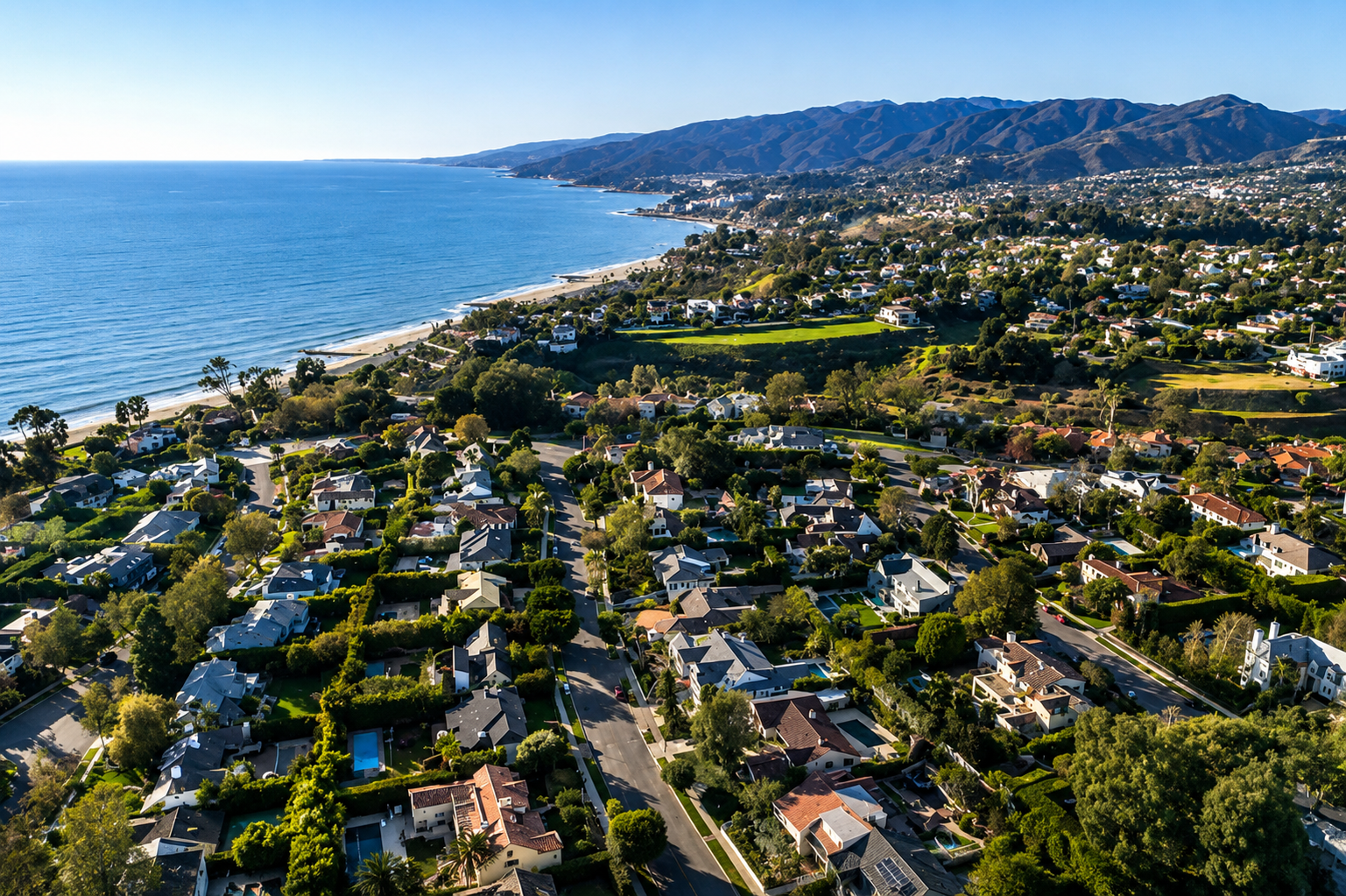
Cheviot Hills was developed starting in the 1920s as one of Los Angeles's early master-planned residential communities, designed specifically to offer quiet, rolling-hill living adjacent to the era's booming film studios. Built out primarily through the 1930s to 1950s, the neighborhood holds an exceptionally high concentration of well-preserved period single-family architecture. Streetscapes feature handsome traditional housing stock—ranging from two-story Colonial Revival and Tudor Style residences to sprawling Monterey Revival homes and custom mid-century modern ranches—many designed by noted Architects of the era for studio executives and film stars.
What makes Cheviot Hills stand out today is its tranquil, suburban feel maintained directly in the heart of the Westside. Unlike higher-density neighboring enclaves, Cheviot Hills is almost entirely composed of spacious, single-family lots on quiet, winding streets wrapped around the Cheviot Hills Recreation Center and Rancho Park Golf Course. For buyers, that creates a rare market offering: classic architectural charm, large manicured yards, and a tight-knit community feel, all situated just blocks from premier commercial hubs.
Cheviot Hills also appeals to buyers who demand an easy Westside commute without giving up neighborhood quiet and privacy. Its strategic position near the I-10 and I-405 freeways—and bordered by Century City, Beverly Hills, Palms, and Ranier Canyon—makes access to Santa Monica, Downtown LA, and major Westside tech and studio campuses highly practical. However, its lasting draw comes from a distinct identity as a peaceful, high-value residential sanctuary. This identity stems from its studio-era origins, expansive golf course green space, and stable history as a premier Westside neighborhood.