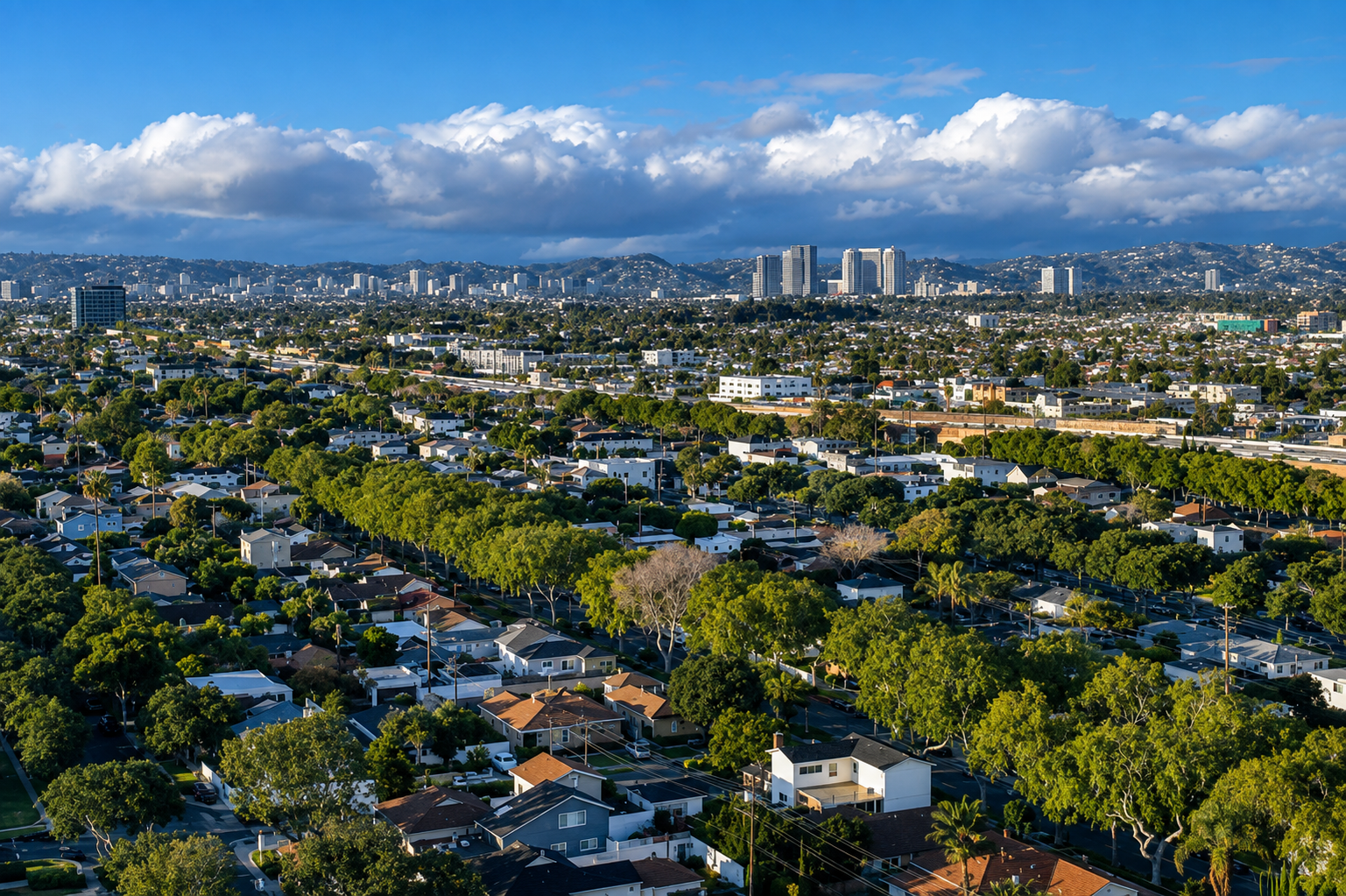
Culver City was incorporated in 1917 by founder Harry Culver and quickly established itself as the original "Heart of Screenland". Developed around early production lots built by silent film pioneers like Thomas Ince, Metro-Goldwyn-Mayer (MGM), and Hal Roach, the city evolved through the mid-20th century as a major media and manufacturing hub. Its residential housing stock reflects this layered development, featuring classic 1920s Spanish Colonial Revival homes and Craftsman bungalows near downtown, Post-War mid-century single-family tracts in Carlson Park and Sunkist Park, and modern residential infill built on former backlot acreage.
What makes Culver City stand out today is its seamless blend of a walkable, historic downtown with a modern tech and entertainment renaissance. The city is home to major employers like Sony Pictures, Amazon Studios, and Apple, driving investment into its thriving dining, arts, and commercial districts. For buyers, that creates a compelling Westside value proposition: distinct single-family neighborhoods, an independent municipal school district, and top-tier commercial amenities, all supported by a strong local tax base and active civic infrastructure.
Culver City also appeals to buyers who prioritize central geographic placement and effortless transit access within Los Angeles. Positioned along the I-405 and I-10 corridors—and bisected by the Metro E Line—it offers straightforward commutes to Santa Monica, Downtown LA, and LAX while bordering Venice, Mar Vista, Palms, and Mid-City. However, its primary draw stems from a self-contained, independent city identity anchored by a rich film legacy and top-tier urban amenities. This identity is inferred from its historic studio lots, top-rated municipal services, and modern status as a central Westside hub.