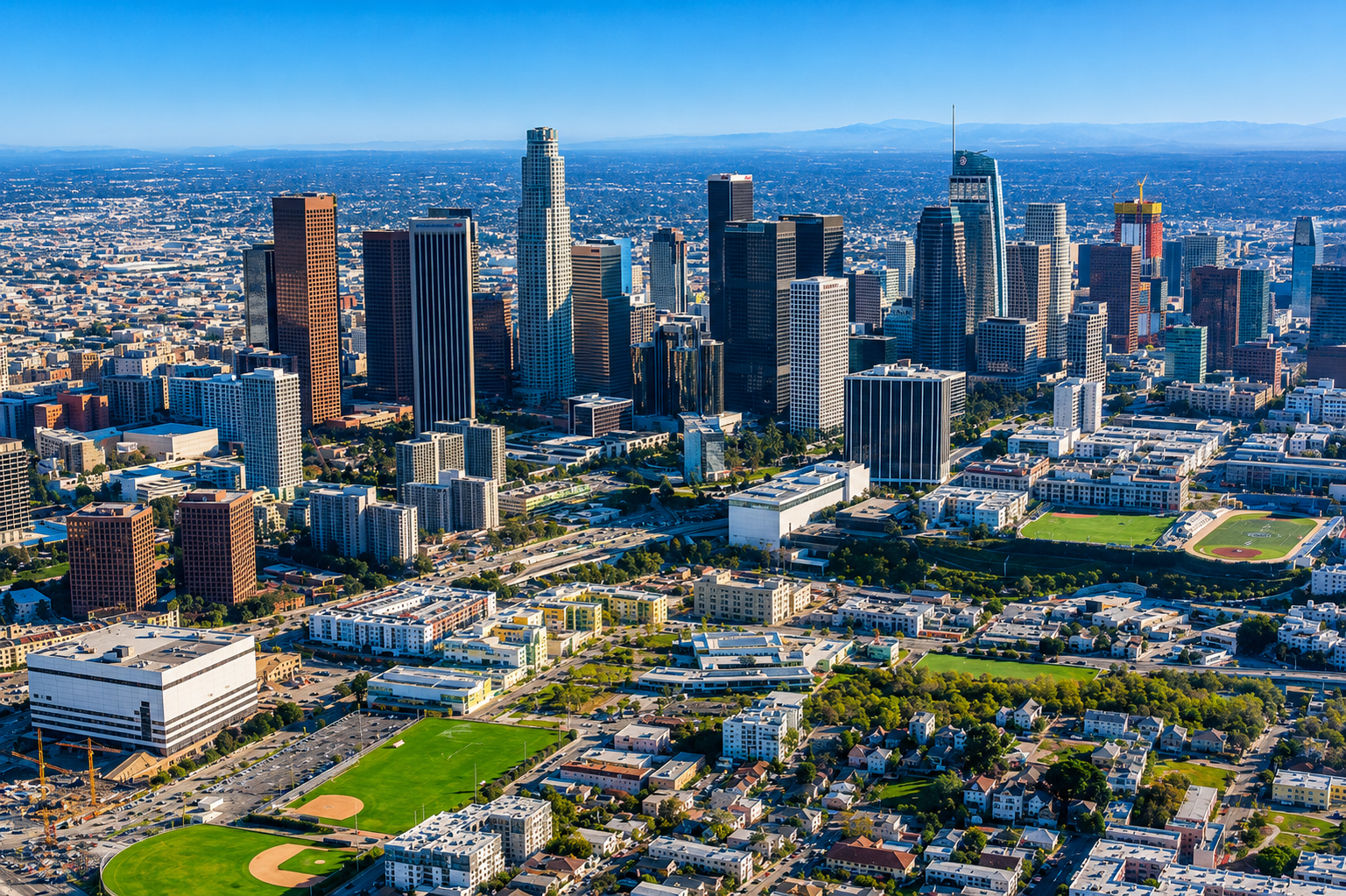
Downtown Los Angeles developed in waves starting in the late 19th century, transforming from the city's original Pueblo settlement into a sprawling commercial, banking, and industrial center. The neighborhood's housing stock reflects this commercial evolution, as mid-to-late 20th century corporate shifts left behind a dense collection of historic infrastructure. Through the Adaptive Reuse Ordinance, DTLA underwent a major residential rebirth, converting early 20th-century Beaux-Arts and Art Deco commercial towers into industrial lofts, alongside a modern wave of glass high-rises and contemporary mid-rise apartment communities.
What makes Downtown LA stand out today is its purely urban, vertical living experience—a rare format in a region dominated by single-family suburbs. Distinct sub-neighborhoods range from the historic cast-iron and brick loft conversions of the Historic Core and Arts District to the high-rise luxury towers of South Park and Financial District. For buyers, that offers a distinctive market proposition: true walkability, historic industrial character, and immediate access to world-class dining, sports venues, and cultural institutions right outside their front door.
Downtown LA also appeals to buyers who want a centralized transit hub with seamless regional connectivity. As the geographic heart of the regional transit network, DTLA is anchored by Union Station and wrapped by the 110, 10, 101, and 5 freeways—bordered by Chinatown, Echo Park, Boyle Heights, and Koreatown. However, its primary draw stems from a vibrant, self-contained metropolitan identity centered around landmark institutions like Walt Disney Concert Hall and Crypto.com Arena. This identity reflects DTLA’s legacy as the region's historic commercial anchor now functioning as a modern residential center.