

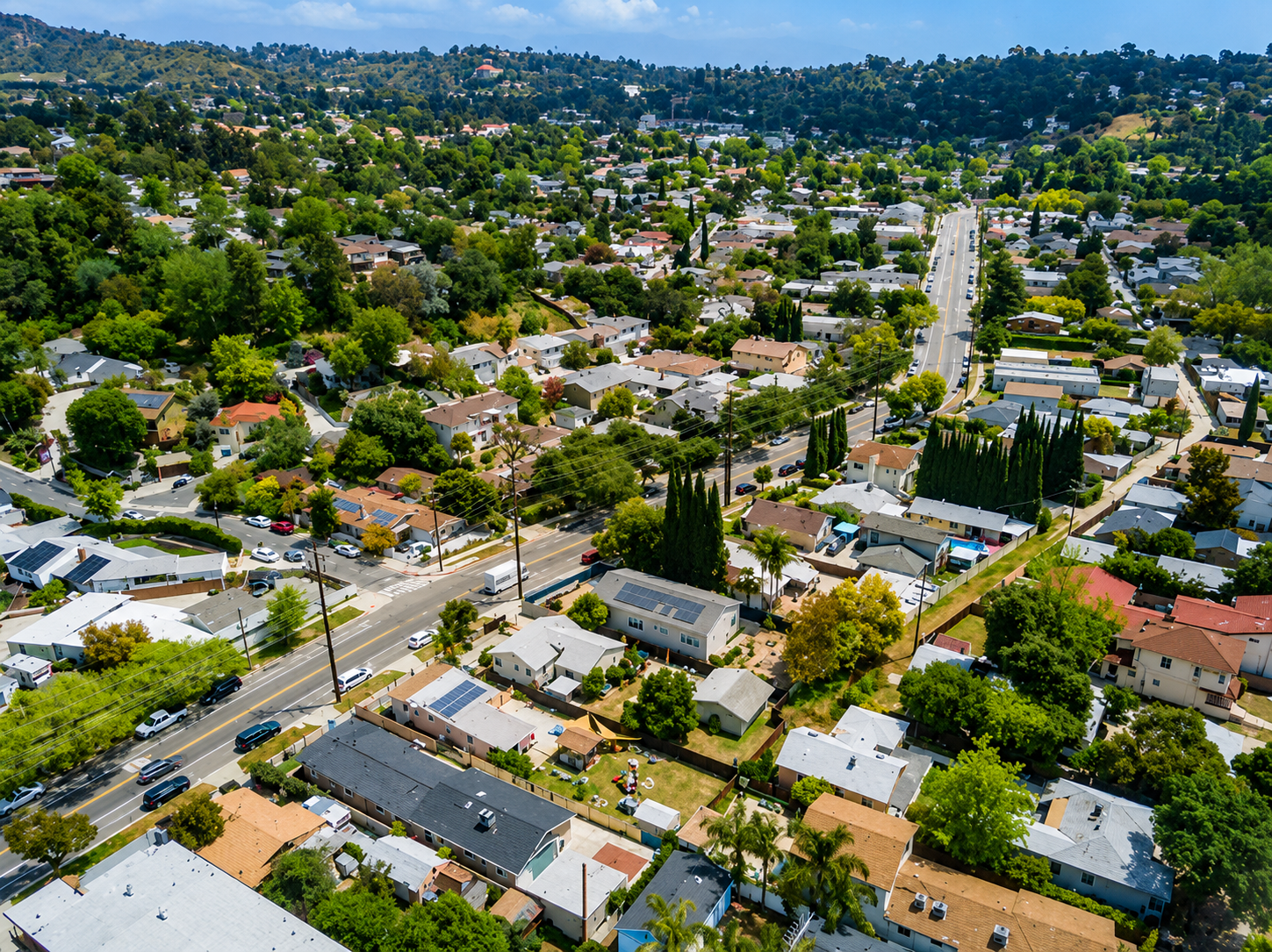
Eagle Rock grew in the early 20th century as a quiet foothill community centered around its namesake rock formation and the arrival of the streetcar. Incorporated in 1911 and later annexed by Los Angeles in 1923, the neighborhood developed in distinct architectural waves. Its tree-lined streets hold a diverse mix of character homes, ranging from late-Victorian farmhouses and Craftsman bungalows to Spanish Colonial Revival residences and mid-century modern properties tucked into the hills. Supported by local historic preservation efforts and anchored by the Mediterranean Revival campus of Occidental College, much of this residential history remains remarkably intact.
What makes Eagle Rock stand out today is its balance of creative, small-town community feel and residential variety within a single Eastside enclave. Neighborhoods range from modest, street-grid homes near Colorado and Eagle Rock boulevards to larger, scenic hillside properties along Hill Drive and the San Rafael slopes. For buyers, that creates an appealing alternative to higher-density Eastside markets: genuine architectural charm, a thriving independent commercial core, and generous lot sizes, all without sacrificing proximity to LA’s central urban hubs.
Eagle Rock also appeals to buyers who want a laid-back, community-oriented lifestyle with easy access to both Downtown Los Angeles and the San Gabriel Valley. Its location along the 134 and 2 freeways, bordering Pasadena, Glendale, and Highland Park, makes it practical for a wide range of regional commutes. However, its draw comes from a more specific identity: a longtime creative haven that has retained its suburban-village pace and strong civic pride. This is inferred from its historic streetscapes, active local arts scene, and its enduring appeal to buyers seeking lasting neighborhood stability on the Eastside.