

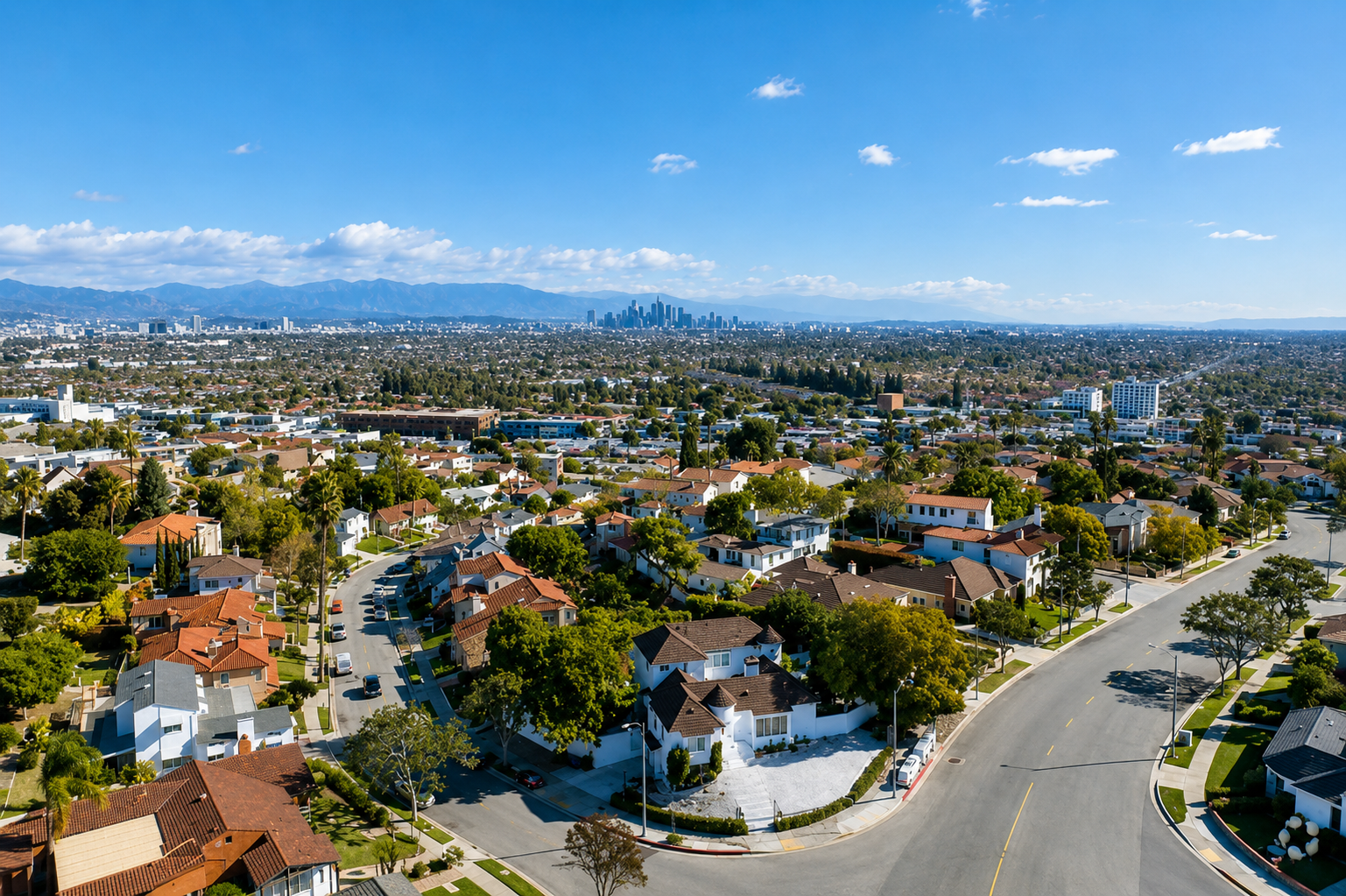
Leimert Park was developed starting in 1927 as one of Los Angeles’s early master-planned residential communities, designed by the Olmsted Brothers firm with wide, tree-lined streets, buried utility lines, and a central commercial plaza. Built out primarily through the late 1920s and 1930s, the neighborhood holds an exceptionally cohesive collection of period single-family housing stock. Streetscapes feature well-preserved Spanish Colonial Revival bungalows, Mediterranean homes, and classic Tudor Revival residences, alongside low-density Art Deco and Streamline Moderne multi-family properties along its outer corridors.
What makes Leimert Park stand out today is its rich cultural heritage paired with strong historic urban planning within a central South Los Angeles location. The neighborhood's hub remains Leimert Park Village, a walkable commercial center filled with independent art galleries, performance venues, and local venues that have long served as a historic center for African American art, music, and community life. For buyers, that offers a distinct market dynamic: pristine early-20th-century architectural character, generous lot sizes, and a vibrant cultural core, all at a competitive price point relative to neighboring Westside enclaves.
Leimert Park also appeals to buyers who want central geographic accessibility complemented by modern light rail connectivity. Its position near Crenshaw Boulevard and Martin Luther King Jr. Boulevard—anchored by the Metro K Line station—makes transit to LAX, Culver City, and Downtown LA highly practical, while bordering Baldwin Hills, View Park-Windsor Hills, and Jefferson Park. However, its primary draw stems from a deeply rooted identity as a proud, artistically vibrant neighborhood with an enduring sense of community stability. This identity is inferred from its historic Olmsted-designed layout, active local preservation efforts, and long-standing role as a cultural heart of Los Angeles.