

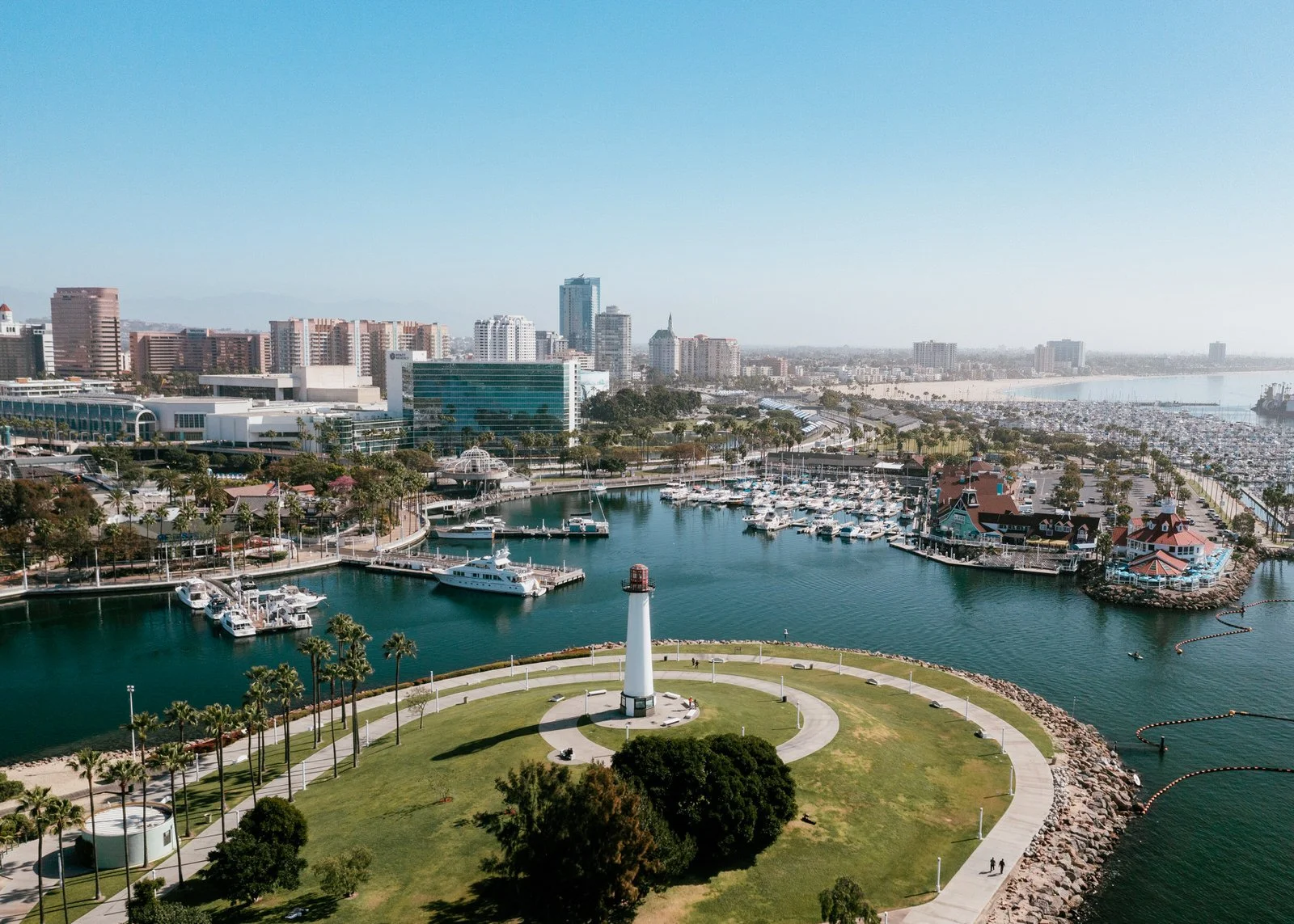
Long Beach is one of Southern California's most distinct coastal cities, shaped by its identity as a working port town that grew into a full-scale urban waterfront. Developed in waves from the early 1900s through the mid-century oil boom, the city holds an unusually wide range of housing stock, from the canal-front homes of Naples and the Spanish and Craftsman bungalows of Belmont Heights and Bluff Park to the Art Deco apartment buildings downtown. Much of this history is preserved in several officially designated historic districts, giving the city a architectural depth that's rare for a place its size.
What makes Long Beach stand out today is the range packed into one city: a working harbor and skyline views, miles of beachfront, walkable historic neighborhoods, and a downtown that has undergone significant revitalization with new residential towers, restaurants, and cultural venues. For buyers, that creates a mix few LA-adjacent cities offer: genuine architectural variety, water access, and relative affordability compared to the Westside, all within one municipal boundary.
Long Beach also appeals to buyers who want coastal living without being priced entirely out of it. Its location along the 710 and 405 corridors, with proximity to Orange County, the South Bay, and Downtown LA, makes it practical for a wide range of commutes. This is a city people look into not just for the beach itself, but for the sense of a real, self-contained community with its own downtown, port economy, and neighborhood character — a sense that comes through in its historic districts and long-standing waterfront identity.