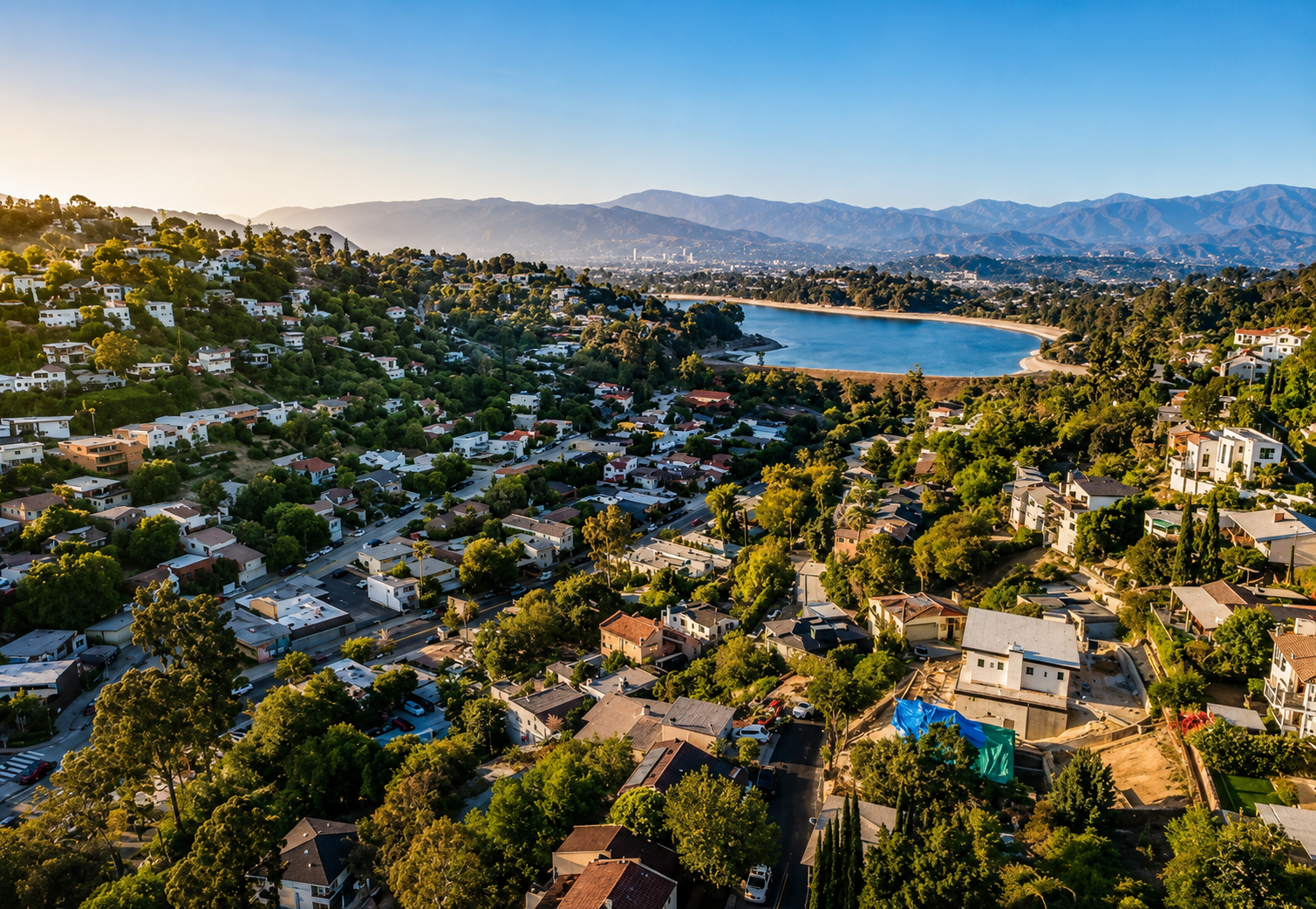
Silver Lake grew in the early 20th century around the central reservoir that gives the neighborhood its name, developing from the early rural tract of Ivanhoe into one of Los Angeles's primary testing grounds for progressive residential design. The area buildout spanned several key eras, starting with early Craftsman bungalows and Spanish Colonial Revival homes in the 1920s, followed by an explosion of mid-century modern experimentation led by pioneering architects like Richard Neutra, Rudolph Schindler, and John Lautner. That architectural legacy remains embedded in its steep, winding streets, where experimental glass-and-steel structures sit alongside classic period revivals and historic public staircases.
What makes Silver Lake stand out today is the concentration of architectural pedigree paired with a lively, walkable hill-town layout. Neighborhoods range from the grand Spanish and modernist estates of the Moreno Highlands bordering the reservoir to the hillside cottages and multi-family moderns along the Sunset Junction commercial corridor. For buyers, that creates a rare market appeal: a high concentration of trophy historic architecture, sweeping hillside views, and direct access to independent dining and retail, all within a compact geographic footprint.
Silver Lake also appeals to buyers who want an energetic Eastside lifestyle with straightforward connectivity to Downtown Los Angeles, Hollywood, and the San Fernando Valley. Its position along the Sunset Boulevard, Hyperion Avenue, and 101 freeway corridors—bordered by Los Feliz, Echo Park, and East Hollywood—makes it practical for a wide range of central commutes. However, its core draw stems from its long-standing status as a cultural and creative epicenter with an unmistakable sense of place. This is inferred from its legendary modern design heritage, its vibrant street life, and its enduring pull for buyers seeking iconic Eastside character.