

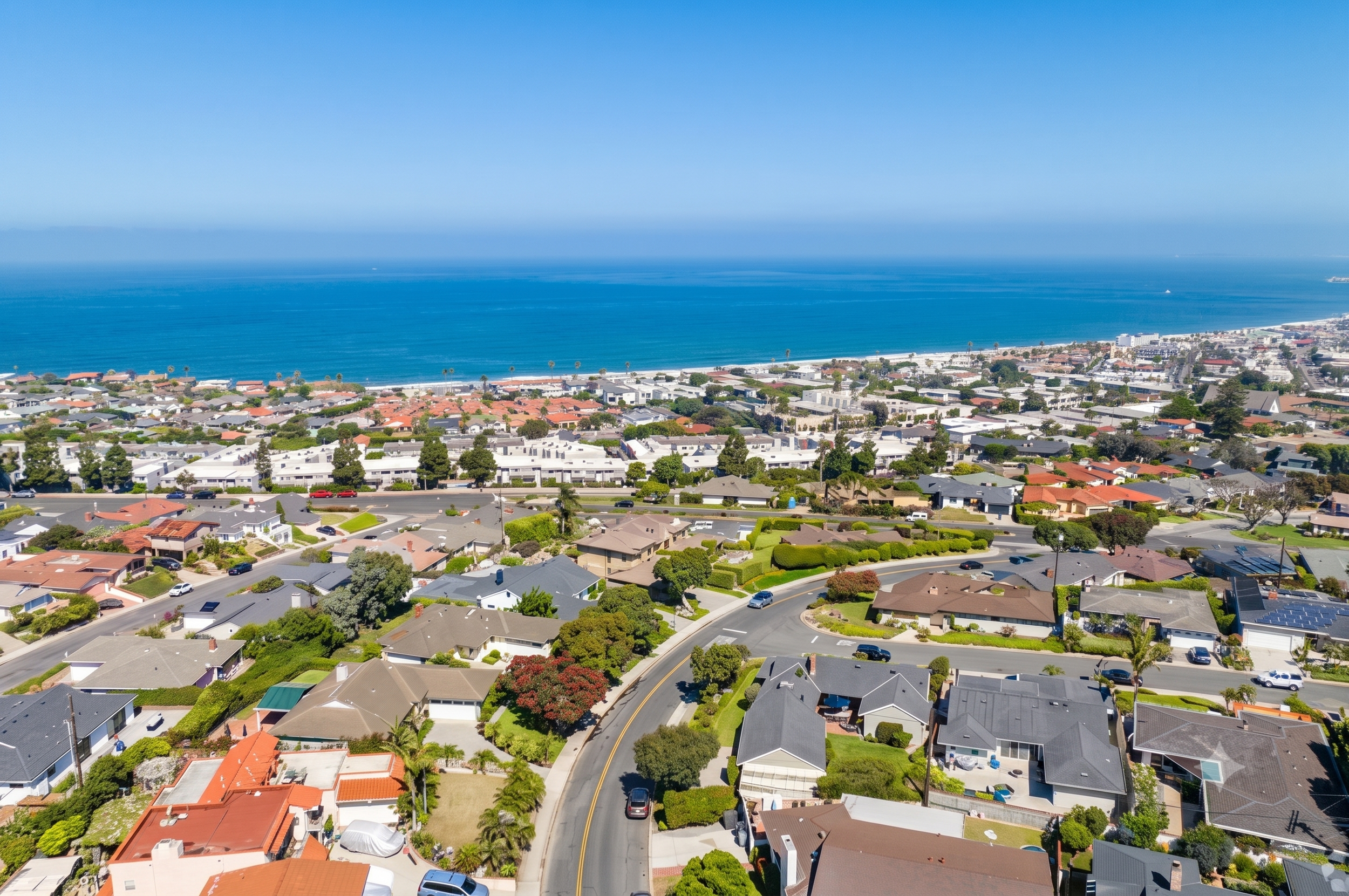
Torrance stands apart in the South Bay as one of the region's few genuinely master-planned cities, laid out in 1912 by noted urban planner Frederick Law Olmsted Jr. and further built out through the mid-20th century as an industrial and residential hub anchored by aerospace and manufacturing employers. That planning legacy is still visible in the city's structure: a defined civic center, distinct residential districts, and a scale and street grid that feels more deliberately organized than much of the surrounding South Bay.
What makes Torrance stand out today is its range within a single, well-run city. Neighborhoods vary from the mid-century tract homes of Old Torrance and Hollywood Riviera-adjacent streets to newer construction near the Del Amo area, all supported by a well-regarded public school system and a level of civic infrastructure, parks, libraries, and a walkable Old Torrance commercial district that many neighboring cities lack. For buyers, that creates real value: coastal-adjacent South Bay living with more housing variety and, often, more square footage for the price than the immediate beach cities.
Torrance also appeals to buyers who want easy access to the beach cities and LAX without paying beachfront prices. Its location along the 110 and 405 freeways, bordering Redondo Beach, Rolling Hills, and Palos Verdes, makes it practical for a wide range of commutes. However, its draw comes from something more specific: a long-standing reputation as one of the South Bay's most stable, family-oriented, and well-planned cities. This reputation is inferred from Torrance's Olmsted-era planning, its strong schools, and its consistent civic investment over the decades.