

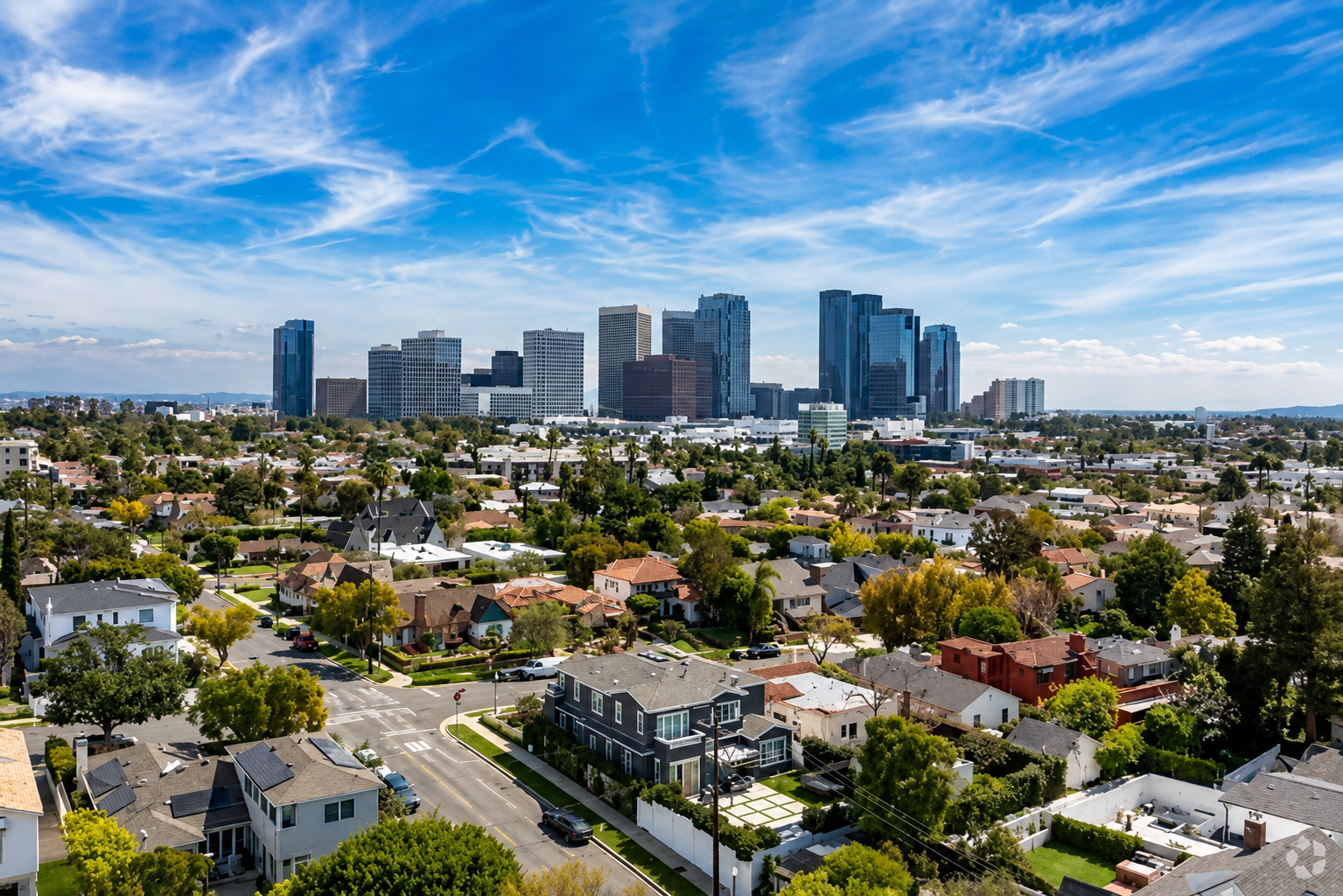
Westwood took shape in the 1920s under the Janss Investment Company, laid out as a master-planned community centered around the newly established southern campus of UCLA. Residential construction expanded rapidly across its varied topographies through the mid-20th century, producing a distinct range of housing stock. Streetscapes north of Wilshire featured grand Spanish Colonial Revival, Tudor, and Traditional single-family estates, while the central corridors filled with Mediterranean Revival multi-family residences, mid-century courtyard apartments, and high-rise luxury condominiums along Wilshire Boulevard.
What makes Westwood stand out today is its combination of premier academic prestige, dense commercial life, and quiet residential enclaves within a single Westside location. Neighborhoods span from the sprawling, tree-lined single-family streets of Westwood Hills and Little Holmby to the bustling, walkable commercial district of Westwood Village and the high-density residential towers along the Wilshire "Millionaire's Mile." For buyers, that offers a versatile market dynamic: prestigious architectural options, walkable urban amenities, and proximity to major cultural institutions like the Hammer Museum.
Westwood also appeals to buyers who want a central Westside anchor with direct regional commuting options. Its position along the Wilshire Boulevard and Santa Monica Boulevard corridors—adjacent to the I-405 freeway—makes access to Beverly Hills, Century City, Santa Monica, and the San Fernando Valley highly practical, with future regional access enhanced by the Metro D Line subway extension. However, its primary draw comes from an enduring identity as a world-class collegiate and commercial hub. This identity stems from its anchor relationship with UCLA, its historic Mediterranean-style Village core, and its established reputation as one of Los Angeles's most stable Westside enclaves.